Overview
A framework for understanding how second-language users reorganise available resources to communicate independently in changing real-life situations.
A functional view of communication
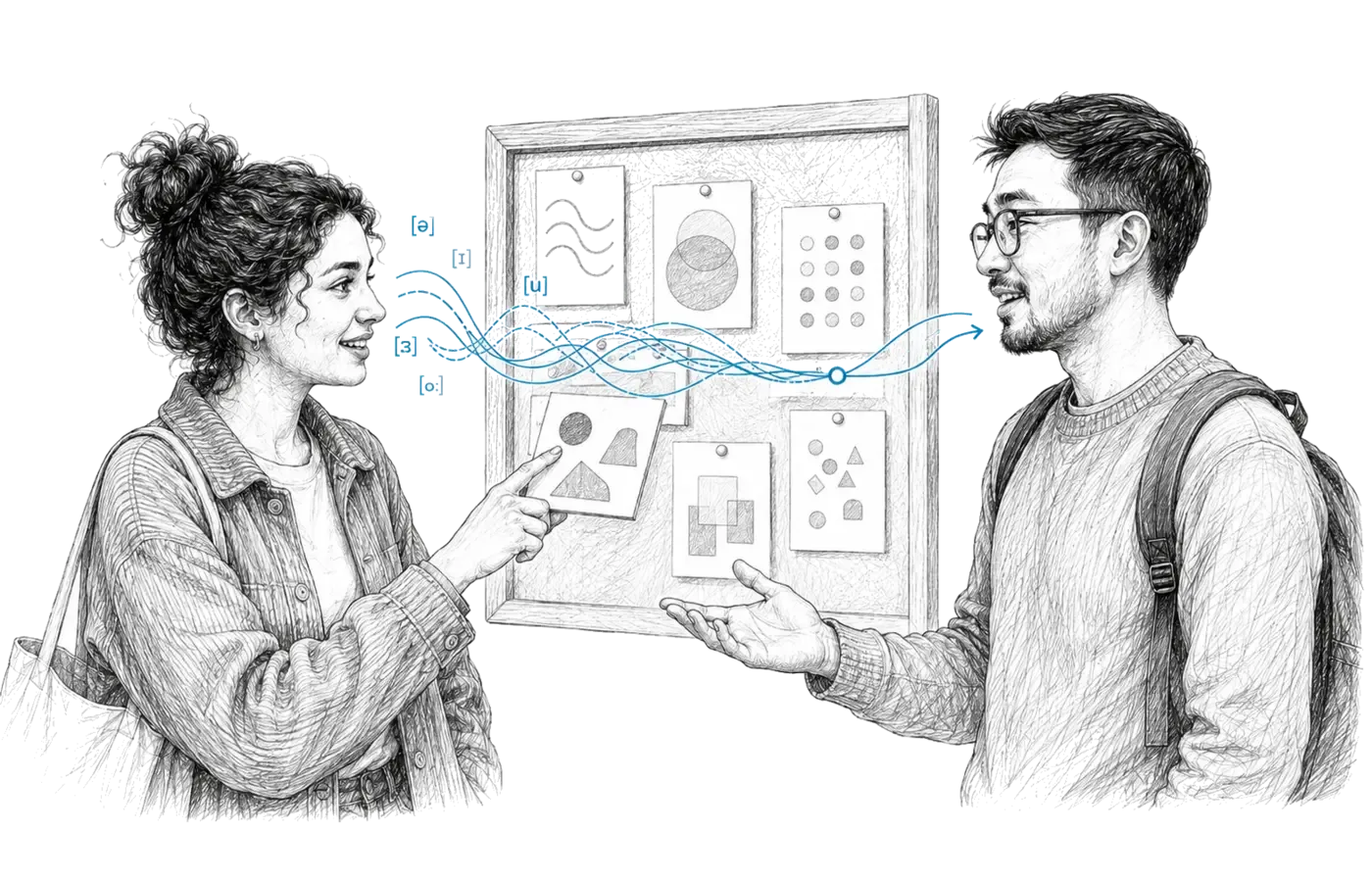
Functional Speech Adaptation focuses on what a person can accomplish through language when the situation is not fully predictable. It connects language knowledge with the ability to enter interaction, make meaning visible, notice a breakdown, change course and reach a workable outcome.
The framework treats speech as situated action. Words, grammar and pronunciation remain important, but they operate together with attention, confidence, prior experience, gesture, visual context, the interlocutor and the purpose of the encounter.
“The central question is not only “What does the learner know?” but “What can the person do when communication begins to change?””
Five connected movements
The framework describes adaptation as movement across five connected functions rather than a fixed ladder. A speaker activates knowledge, formulates an utterance, enters interaction, adjusts to feedback and evaluates whether the communicative purpose has been achieved.
- Knowledge: linguistic and experiential resources available to the person.
- Expression: turning intention into an understandable contribution.
- Interaction: coordinating meaning with another person.
- Adjustment: reformulating, clarifying, slowing down, asking, gesturing or changing strategy.
- Outcome: achieving enough shared understanding to continue acting.
Where the framework sits
Functional Speech Adaptation brings together long-standing work on communicative competence, communication strategies, willingness to communicate, interaction, dynamic language development and functional adequacy. It does not rename these traditions; it organises them around the transition from possessing language knowledge to using it independently.
This synthesis creates a practical bridge between pedagogy, observation and research. The same framework can guide the design of learning situations, the description of learner behaviour and the analysis of change over time.
Functional cycle
- 01Knowledge
- 02Production
- 03Interaction
- 04Adjustment
- 05Outcome
Publications on this topic
Internal research syntheses connect this page with the primary scientific literature.