Overview
A practical lens for designing situations in which learners use language, notice what changes and build greater independence.
Start with a human purpose
A functional task begins with something a person is trying to accomplish: understand a route, ask a neighbour for help, explain a preference, resolve a mistake or join a shared activity. The language content follows from the situation rather than replacing it.
The teacher identifies the resources learners may need, but the task leaves room for choice. Different successful formulations are possible because real communication rarely has one answer key.
Design productive variation
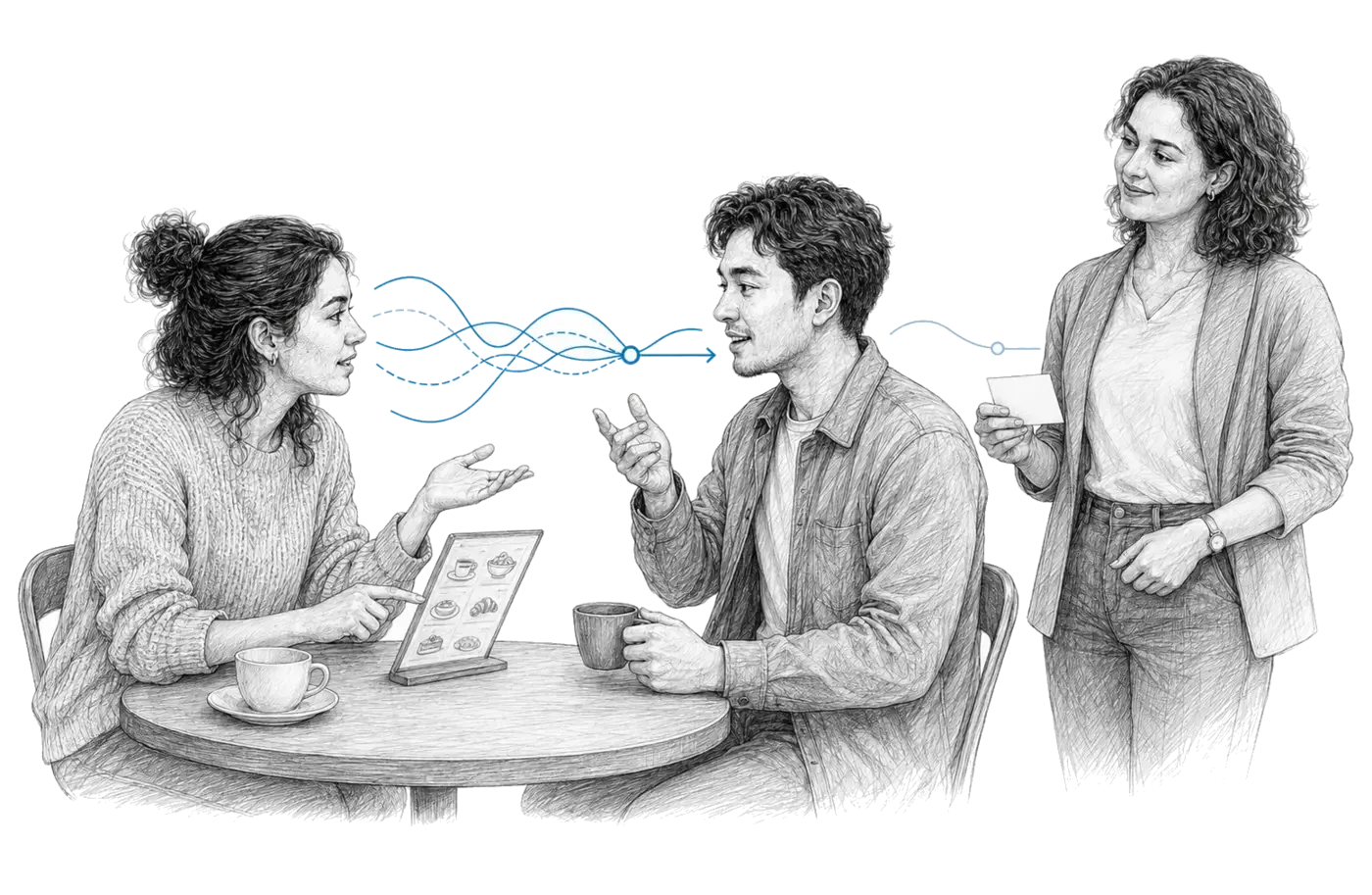
Adaptation becomes visible when something changes. The interlocutor may ask an unexpected question; a detail may be missing; the setting, degree of formality or available visual support may shift. Variation should be meaningful and proportionate, not a trick designed to make the learner fail.
- Change one condition at a time when introducing a strategy.
- Allow gesture, objects and visual context when they belong to the situation.
- Teach clarification and repair as positive communicative actions.
- Reduce support gradually rather than removing it all at once.
- Repeat the purpose in a new context so transfer can be observed.
Feedback after action
Feedback begins with what happened: what the other person understood, where coordination slowed down and which strategy restored it. Linguistic feedback then becomes more useful because it is connected to an experienced communicative need.
A short record of independence, adjustment and outcome can reveal progress that a grammar score alone may miss.